
About Pravah
A Network for Water Lorem Ipsum heading
Pravah was established in October 1994 as a broad coalition in Gujarat, following a comprehensive study by the Centre for Drinking Water Resources Management of Utthan that highlighted a severe drinking water crisis in the state and called for strong advocacy, policy influence, and decentralized programming to guarantee drinking water access for all. Supported by 65 NGOs and individuals at its inception, Pravah set out to empower communities toward self-reliance in water management and to catalyze a statewide movement for safe, sustainable, and equitable drinking water and sanitation.
-

Pravah’s Origin and Objectives
- Formed in response to critical drinking water shortages and lack of effective policy in Gujarat.
- Conceptualized as a platform to unite NGOs, experts, and individuals for advocacy, capacity building, and policy change in water management.
- Aimed to transition from dependence on external supply and stopgap solutions toward community-driven, decentralized water solutions.
-
Key Approaches and Achievements
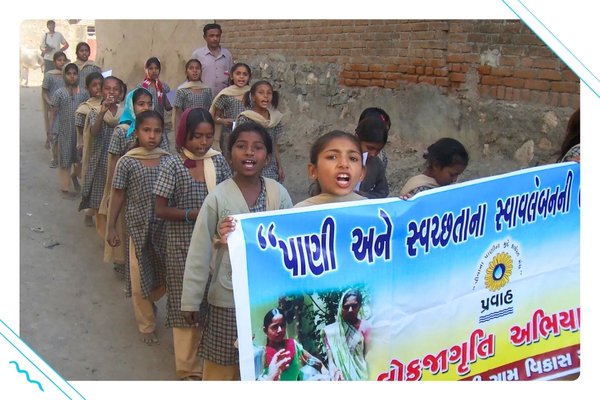
- Launched major campaigns focused on self-reliance (Swavlamban) and village-level water monitoring.
- Worked in over 5000 villages and multiple small towns to demonstrate and facilitate alternative, community-managed models for water and sanitation.
- Played a leading role in influencing Gujarat’s water policy, promoting sustainable, locally-managed water sources over solely state-led interventions.
-
Ongoing Legacy
- Pravah functions as a knowledge platform, continuing to advocate, research, and build capacity for drinking water and sanitation security in Gujarat.
- The coalition’s work is recognized for helping drive a paradigm shift in the state’s approach to rural water management, prioritizing local participation, sustainability, and gender equity.
This model has provided a foundation for ongoing efforts in Gujarat to achieve water security in alignment with sustainable development goals, while fostering strong civil society engagement and decentralized governance.